
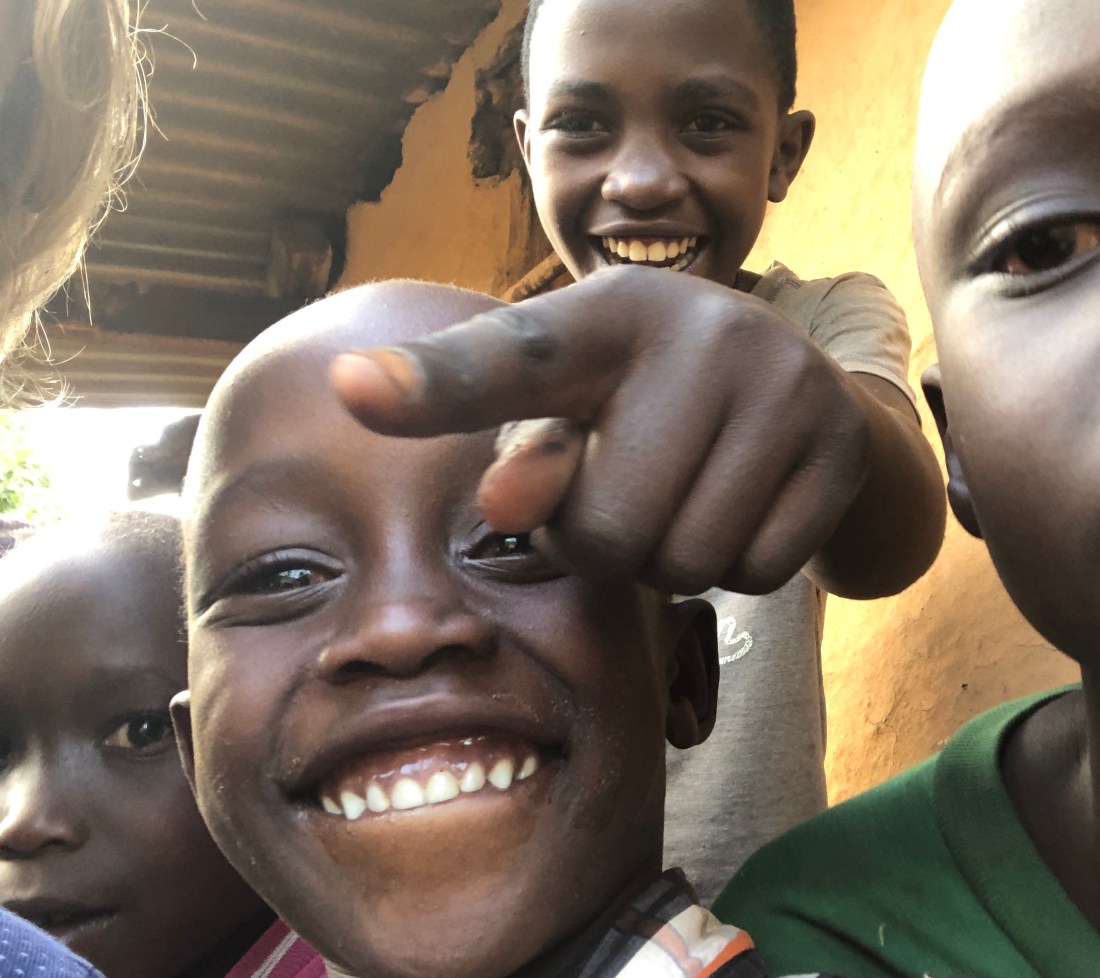
Within thirty-six hours of landing in Uganda I’d been robbed, accused of being a spy, and threatened with capital punishment. Was this really the so called ‘Pearl of Africa’ as coined by Winston Churchill in 1908, or had something grabbed hold of Uganda in the 100 years since Churchill walked those lands? Where were the smiling faces and untouched lands seen on National Geographic? Had the forbidden fruits of tourism dollars tainted this place?
I flew to Uganda with no plan, no hotel reservations, no safari guide, and no motorcycle skills. I rented a motorcycle though, and took out $600 cash for the trip. After landing in Uganda I realized my debit card didn’t work, so the $600 dollars cash in my wallet would need to be spent wisely. $600 should be more than enough for two weeks in Africa, I reasoned. But I soon learned that Africa becomes a verb quickly while traveling there. A valid substitute for four letter words. Like when getting robbed, one might say…’ahh I just got Africa’d’… that sort of thing. In many ways I wanted to get Africa’d. I fostered this beautifully awful paradox of yearning for a real experience in Uganda, but not fully accepting the beast of burden it would be. I wanted to experience what life is really like there, or at least as close as I could get to it in the few short weeks I had to travel in Uganda. And I truly hoped for wholesome moments with mother nature, dancing with locals, obscure local meals, or whatever else presented itself. I had a naively positive vision and expected a fantastic adventure. Well, suffice to say, I succeeded in my quest to get Africa’d, I think, and got more of an adventure than I was ready for.
Rolling backwards on my newly rented Bajaj 150 motorcycle on the main highway out of Kampala seemed a fair moment to admit to myself that I had made a critical error in my calculations. I’ve hit the jackpot on two separate slot machines on one freezing night in the north of England though, so I chalked this up to an unfavorable swing of fate’s pendulum rather than a fundamental flaw in my hastily formed plan as a whole. Mercifully, after many close calls with angry Ugandan taxi drivers, a local kid offered to help me get my motorcycle off the main road. That’s the way it seemed at least, I wasn’t sure, I couldn’t understand what he was saying because of his thick accent. I got lucky, and the local mimed the controls of the bike to me: front and rear brake location, clutch, and gear shifter, and then he demanded I pay him. I was getting Africa’d! Great, just what I wanted! I agreed to pay him and then he also demanded I buy him breakfast, seeing how much he could get out of me. So off I go with this kid, my motorcycle screaming for mercy as I continually chose the wrong gear on our way to what must have been a very tasteful breakfast joint judging by the distance we were traveling to get there. As I followed the local deeper into the city my beginner’s luck seemed to be dwindling. I was fifteen minutes into my first time ever riding a motorcycle, and had not finely tuned my skills to dodge the Kamikaze like barrage of taxis, motorcycles and pedestrians that flood the streets of Kampala. I stalled in an intersection, hit a pothole and rode off the road, and just narrowly avoided a head on collision with a maniacal taxi driver who was overtaking in the wrong lane, my lane. Against the odds, I still had the rubber side down as the local told me we were close to this breakfast oasis.
My creative riding style attracted the attention of Uganda’s finest. Uganda’s finest criminals, so criminal that they are actually the law. A pick-up truck with eight armed police stopped me and my breakfast hungry impromptu motorcycle teacher. First they questioned him, asking for his tour guide license, after he stated he was my hired guide. Then they turned to me, asking what I was doing with him. Not wanting to tell the full story of how I met my traveling companion, which would entail admitting that I didn’t know how to ride a motorcycle, I told the police that we were friends and that he was showing me a tasty breakfast spot. The rifle-wielding police chief’s face turned from anger to mild pity towards me, as if I was a helpless mouse heading for a trap. They explained that the local was not taking me to a breakfast spot, rather he was guiding me to a dangerous part of the city where he was going to rob me of everything I was worth. There’s a lesson in that, and it’s a lesson I carry with me now. It’s what jades people into old age, into driving slow with hands on ten and two. The acceptance that not everyone can be trusted, and it’s always better to be cautious. My own theory differs a bit from that though. Parties don’t happen between ten and two, so as a matter of course I drive with one hand on midnight, always at five miles over the speed limit to fight the effects aging. Five miles per hour over the limit, because I don’t want to spend money on a speeding ticket, and most cops will allow five over without hassle (in the U.S. at least).
It’s a real tricky line to walk, between paranoid, old-man thinking and all out anarchy. Until that point in Africa I had never really put much thought towards caution. I never totally ignored it though either. But the consequences felt much more severe now that I was in Uganda alone with no one to blame apart from me, myself, and I.
The police officer in the passenger seat of the pick up truck said to follow him, to a safer place with the hint of a wry grin shedding light on the depravity behind the badge. To this point, I had only successfully gotten the bike into first gear a handful of times, and never without stalling armfuls of times before. In my infinite wisdom, I had proudly lied to Uganda’s Finest, telling them that I owned three motorcycles in California and even raced them occasionally, after they had pressed me on my ability to operate the motorcycle safely. It was a reflex lie from the gut, like a child denying eating a chocolate bar with chocolate stains on his face. Miraculously, and a testament to my good luck in the shadows of even worse luck, I forced the bike into first gear, and listened to it rev up begging for second gear. I froze, completely shocked that I had gotten it into first gear on the first try, and didn’t shift into second gear until the revs were so high that people in Timbuktu were surely aware of the idiot on the motorbike. The police in the bed of the pick-up all looked back and laughed as the bike wailed for a better rider.
I followed my police escort for fifteen minutes until we got to a nondescript dirt pullout. They spared no time before explaining the gravity of the situation to me. “Jail…yes, I’m sorry Mr. Booooooterfeld, there is no other option. What you have done is a serious crime in Uganda.” What exactly I had done was not clear. Apart from being a comically bad motorcycle rider, they had nothing on me – so I pushed back a bit. Perhaps though, I’d been a bit too cavalier, because after I said my piece, the police told me that not only was jail time a certainty, but that I may face capital punishment for my high crimes. The white flag was all but up now on my end, and I desperately hoped this was a very elaborate way of getting bribe money. Bribing seems to be a bit like a first date. You don’t want to come out and say exactly what your getting at, rather you hint at it until it’s blatantly obvious what you want. To do it any other way is rude, of course. So, I essentially said, “Oh golly gee officer, if only there was something I could do now to make my crimes against Uganda disappear.” They took the bait and eventually we settled on 100,000 shillings, because that was all the cash that I told them I had. The rest I had stowed in my socks – a precaution that seemed silly two hours earlier, but turned out to save me a lot of money.
With that, I was free to get back on the road. Back on track to an early death by motorcycle was the way it felt. The lawlessness and disregard for any sane traffic conduct on the road to Jinja cannot be overstated. Cars flowed like driftwood down a stream, picking the path of least resistance regardless of the consequences. The highway operated just shy of the threshold of failure, as if one wrong move would cause cataclysmic failure. Where the road was paved, crater sized potholes acted as speed bumps, as the traffic was too dense to ride around them. I never cruised at a constant speed in the three hour trip from Kampala to Jinja. The taxi’s, motos, pedestrians, and potholes came fast like a high-octane video game. Just short of my destination of Jinja, I pulled off on a side road for a quick wee. There was no one around, I made a point of traveling far down this dirt road so that I wouldn’t be caught with my pants down by a criminal. Paranoid thinking, I thought. Mid wee, in a scene fit for a bad movie, a guy appeared out of the bushes from my left side. He began to question me in an overly friendly way. His nearly toothless smile did not distract me from noticing his shifty eyes. As I planned my escape, he took one big step forward, taking the key out of my motorcycle at the same time. Now he had the high ground and I was stuck. Stuck on this road, stuck in this situation, stuck with this dude who was surely going to rob me, stuck in Uganda, and stuck with the consequences of a trip so poorly planned that it was far past the border of reckless. It felt bad, I hadn’t eaten or drinken anything that day and I’d only slept a few hours each night since leaving California four days ago, my helmet was at least a size to small, and the sun in Africa was determined to make me a tomato by nightfall. I was getting Africa’d harder than I wanted, and combined with the police issue just a few hours earlier, the whole trip was seeming a dreadful mistake now.
The pressing issue was not my helmet or hunger though, it was the the thief that now held the key to my motorcycle. After more banter than was necessary for what was clearly going to end in robbery, the thief announced that I would love to meet his friends, so he called them. And in less than five minutes, two motorcycles showed up with three more guys, making my problem three times worse and at least that much scarier. I’d given up the fight here. I’d lost this one for sure, and the fact that it was four on one aggravated me. What enraged me though, was that these guys felt the need to engage in casual conversation as they slowly worked their way towards the impending robbery. Eventually the four thugs gave up the act, and demanded money, play time was over finally. I had all but $50 stashed inside of different pairs of socks still, and showed the sole bill in my wallet to the dipsticks. $50 is nearly 200,000 Ugandan shillings, that’s enough to buy half a million avocados at Mzungu prices. They seemed satisfied enough with the fifty. They conversed a bit in their language, and then three of them left. The fourth, biggest, and original dipstick lingered while I repacked my backpack, asking me three times if I felt harassed. Then he asked for a ride into town. He asked this, but it was not a question. Awkwardly, he directed me to ride with my oversized backpack worn on my front, blocking my view of the road, so that he could sit behind me. Just before sitting on the motorcycle I told him that I had just learned how to ride motorcycles that morning and that I wasn’t very skilled. He dismissed this as a bluff opening my window for sweet revenge. I stalled the motorcycle four times before jolting into first gear, wobbling off the road and then nearly hitting a taxi while making the turn onto the main road. Only half of that was accidental. My passenger began yelling in terror and demanded I let him off. Happily, I pulled over let him off, and rode the last seven miles into Jinja without any major mishaps.
The dual pronged attack of fate that I’d fended off the first day in Uganda left me fighting to keep a positive outlook for the road ahead. Jinja was just my first stop. I originally planned to continue to a rural village, Sipi, near the Kenyan border the following day. Instead, stayed a day in Jinja eating passion fruit and avocados in my newly-purchased four dollar Ugandan collared shirt. Although I enjoyed the slightly calmer atmosphere in Jinja compared to Kampala, I was happy to leave. My hostel felt more like a compound because of the ten foot tall barbed wall surrounding it. And inside the compound were fifteen or so other Americans that were in Jinja to do missionary work. The missionaries seemed determined for the exact opposite of what I wanted out of my trip. They were here for themselves. So they could say, ‘I helped Africa.’ They seemed to be here for instagram photos, bragging rights and a line on their resume. They talked about the locals dismissively and scoffed at the local food in front of the Ugandan workers at our hostel. I left Jinja looking forward to go deeper into Uganda, and nervous as well, hoping my first days travel wasn’t a template for what was to come.
I left Jinja at sunrise and reached Sipi after about five uneventful, although stressful, hours dodging the ever-present traffic chaos. I hadn’t crashed the moto yet though and I was a few hundred miles from where I had started, so in that respect I felt I’d achieved a great victory. The victory did well to feed my twenty-one year old feelings of invincibility, but not without casting a larger sense dependence on dumb luck. I arrived to my mountainside hostel, which lacked good food, electricity, running water, but did not lack hospitality. The locals here were genuinely good people who repeated, Make yourself at home more times than I could count. A frail bodied, somber-faced man named Alex approached me at some point and introduced him as a tour guide. I spent the next two days with Alex. We went to his home and he showed me how to make coffee. From picking it off the plant to roasting it over a fire, and finally drinking it. I met his brothers, sisters and his Aunt and her friends. They lived in a mud house which was only accessible by walking up a narrow pathway for twenty minutes from the main village. Alex later told me his mother had died Christmas day some years ago after suffering heart attack in her home, too far away from medical help to save her. The kids had made a soccer ball out of trash tied together with stings to form it into a shape resembling a ball. Alex chewed on Eucalyptus root to clean his rotting teeth and pointed out a particularly soft plant that locals use as toilet paper. It was as different a life from my own as anything I could possibly imagine. Different and uplifting in many ways. Alex’s younger sibling had the most candid toothy smiles I’ve ever seen, and his Aunt and her friends spent an hour rehearsing a song about the blessings of rain. It was impossible to be in the presence of those kids smiles without reflecting a similar one.
It was after hiking for five hours on my second day in Sipi that Alex asked me if I was hungry. We’d not eaten breakfast or had water that day yet. I told him I was, to which he replied, “I am not. I can walk for nine hours with no food or water.” Alex was rail thin to the point where it looked as though he hadn’t eaten in weeks. I didn’t doubt his statement, and insisted on buying us lunch. Alex was a wealth of knowledge and provided a real view of life in Uganda. That doesn’t mean it was easy though. Alex rarely smiled, and was staunchly religious. He was in a committed relationship to a girl who he only saw on holidays, about four times a year he told me casually. I prodded Alex for as much knowledge as I could get. About not just Uganda, but also about him and his life. We talked Ugandan politics, the price of land, and the correct way to cut an avocado. Alex and I shared our dreams for the future and by the end of my second day a seed of a friendship was planted. Before I went to bed on my last night in Sipi, Alex mentioned he would like to meet in the morning to say goodbye. A small gesture of kindness, but it meant a lot, especially since Alex had told me the previous day how annoying tourists are.
Water costs 3,000 shillings a bottle at my mountain hostel in Sipi, and I was running seriously low on cash by this point. Exemplifying full prefrontal cortex development, I decided not to buy water the morning before I departed the hostel. In fact the last time I drank water was the day before around noon and I was thirsty for sure, but I knew that the hostel in Jinja had free water and that was just five hours away. Surely I could make it.
Well, it was viciously hot that day, but of course it was. It was hot everyday that I was there. The road work on the way back to Jinja caused a dusty, seemingly endless slow down. I began to feel like I was coming down with a fever and my bike handling was declining rapidly. A few narrow brushes with Lucifer and seven hours later I rolled into Jinja about as sick and dead feeling as I’ve ever felt before. I took two gallons of FREE water to my bunk bed and drifted off into a two hour napped, interrupted intermittently by my water chugging. After two more gallons of water at dinner my quick wits and good spirits returned enough to have a fascinating conversation with two American lawyers who were traveling from Cairo to Johannesburg. They seemed as shocked by my solo motorcycle journey as I was shocked by their trip. They had had rocks thrown at them, they had been robbed and had been constantly harassed over the last two months. But these were seasoned travelers, and they were able to laugh at these stories as they told them, and I enjoyed laughing as I told them unfiltered versions of my Ugandan misfortunes as well. We talked over high quality Ugandan beer, for which they paid as my non-functional debit card and thinning reserve of cash couldn’t budget, especially with the ride to Kampala still looming. The almost certain robberies took precedence in my budget over beer. Better to have money for the robbers to take, than not to have money and get shanked instead, I thought.
I had struggled, stalled, but had not crashed my motorcycle yet. I had over 500 miles of moto riding to my name and it really looked like I would be pulling into Kampala with all my limbs. But I had yet to navigate through Kampala.. I split lanes, stalled some more, and ignored the constant screams of locals unhappy with my lack motorcycle skills. A quarter mile away from my hostel, Ol’ Murphy tipped his hat at me. I made right turn at the wrong time and came a hair’s distance seeing what the bumper of a taxi tastes like. My last reserves of good luck saved me again. I parked the motorcycle at the Fat Cat hostel and ended my Ugandan journey just like that.
It’s unfortunate that to tell the of my trip to Uganda I have to talk about robbery and danger, but not to would be irresponsible to the story, I think. I went to Uganda with misplaced trust in humanity. Thinking that people are, at their core, mostly good. And I assumed this of the Ugandan people as I have with every place I have traveled. The constant threat of pickpockets, insurance scams, robberies, corrupt police, etc. wrote a different story than I hoped I could create. In fact, just before writing this there was an article in the news about a girl from California who had been kidnapped in Uganda. She had been traveling with a guide in one of the national parks and the kidnappers are demanding $500,000. Further, a local girl I had gone to dinner with in Kampala had been robbed at knifepoint the week previous and asked, in fear, if I would walk her to the bus stop after our dinner. Later, I met a tour company operator who had been robbed of nearly all of his belongings, including his wallet and passport, when his car had broken down on a rural road north of Jinja. The dangers are real. To me, Uganda felt like it was in Limbo, between old and new. You can see small communities that live on the land, and you can also see people walking around with smartphones and ironed suits. It’s in limbo with the tourist industry as well. On one hand you’ve got all of the benefits from the pouring in of tourist dollars. That also presents an easy opportunity for the poor locals to rob oblivious tourists with their wallets hanging out. It’s also very clear that the tourist dollars coming in are not bettering the communities. Instead, locals now deal with gigantic compound-like structures, with barbed wire walls being built where trees used to stand with monkeys swinging on them. There was, and justifiably so, a chafing between the tourists and locals. Nearly all the locals I met seemed to hold resentment towards me. I have no doubt that a relaxing journey through Uganda is possible. I met many people who had paid for expensive safaris, gone on missionaries, and volunteered with the Peace Corps who weren’t robbed. The common theme with those people was that they went only where directed by their higher ups. In some cases that was their tour guide, or their missionary preacher, or their reporting officer, but the commonality was sticking to the beaten path. Memorably, after visiting a mosque in Kampala, I went to explore off the beaten path. Within twenty minutes I found myself in an alleyway getting yelled at by locals, aggressively saying, “Get off my land white boy.” My fast walk turned to a run, as they began to approach me. In hindsight it was silly to arrive in Uganda and think I’d be met with open arms. Despite the difficulties though, my idiotic, poorly planned motorcycle journey was successful, in my eyes. I set out to get a real Ugandan experience, and I think that’s what I got. Something very unfortunate to admit though, is that the confidence I had entering new places was chipped away while I was in Uganda. The thirty-five countries I had previously visited taught me to assume the best in people, and to think quick on my feet when things go south. Uganda showed me there are caveats to that rule, and that sometimes it’s better to assume the worst in people and be pleasantly surprised, rather than getting caught with your pants down in the outskirts of nowhere. I am grateful to those in Uganda that showed me kindness and generosity, of which there are a few very memorable. The natural beauty and kind locals are contrasted harshly by the poverty, hunger and real danger in Uganda. To ignore those facts, as many blogs and articles I read before I left for Uganda did, is foolish and dishonest. I would hope that my mishaps and misfortunes through Uganda are strange outliers, and I do not write this to discourage travel to Uganda. It is just an honest conveyance of one very real trip through a most remarkable land filled with some greatest smiles I have ever seen, and some of the harshest realities. In Uganda tread carefully and be sure to have an abundance of good karma to spend while your there.
 The Pursuit of Happiness